

Aaron Cheak
Andalusian Lightning: Jean Gebser and the Irruption of Nonduality
Having abandoned his fatherland and mother tongue in 1931 in a spirit of primordial trust, Prussian-born poet and phenomenologist Jean Gebser received the “lightning-like inspiration” for the work that he would spend the next two decades elaborating: Ursprung und Gegenwart (The Ever-Present Origin, 1949/1952). The roots of this work inhered in a deep insight about the nondual nature of reality which Gebser first experienced in Spain. Following in the footsteps of Rainer Maria Rilke, whose Spanish journey would be the subject of Gebser’s first monograph, Gebser’s fundamental perception crystallised through a consciousness of the Andalusian sky as a boundless internal and external intensity embracing both heaven and earth, the realm of the living and the realm of the dead, and ultimately origin (Ursprung) and the present (Gegenwart). Herein, the limitations ordinarily imposed by space and time melted away into an awareness that brought the farthest reaches of the cosmos not only within one’s grasp, but into one’s very being. Rilke’s “interior cosmos” (Weltinnenraum) thus became for Gebser a distinct reality.
“The shining winter sky is close enough to touch”, he remarked in his 1944 Winter Poem; but there is no reason to even reach out because “all the stars flow through your veins”.
Gebser’s inspiration was not merely of personal import. He was able to see, in a single flash, the emergence of an entirely new expression of human consciousness irrupting equally through both the creative and destructive manifestations of culture. The disruptions to previous conceptions of reality effected by this nondual consciousness ripple through the highest achievements and deepest crises of contemporary civilisation. The increasing fragmentation to which our present culture bears obvious witness are, for Gebser, so many symptoms of a dangerous but necessary dissolution.
To explore the significance of Gebser’s insights into the nature of consciousness, this presentation will first situate Gebser in his bio-bibliographic context—to include his little-known presence at Eranos—before focusing on the nature of nondual awareness itself: how freedom from duality can be cultivated not merely as a conceptual construct but as a living, transformative reality.
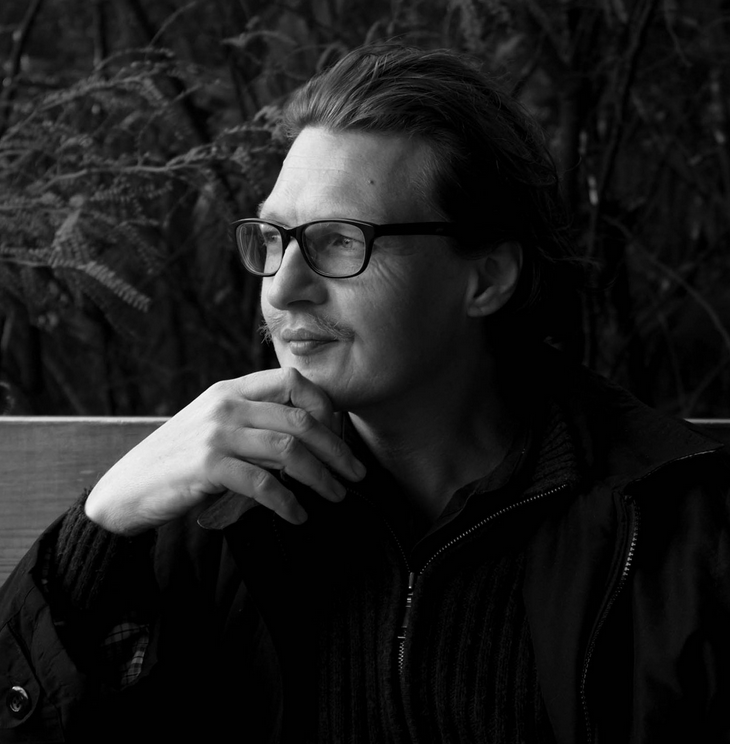
Aaron Cheak, PhD, is a distinguished scholar of comparative religion, philosophy, and esotericism whose work moves with unusual fluency across the boundaries of rigorous scholarship and the living currents of the Hermetic tradition. Educated at the University of Queensland, where he studied classical Sanskrit, German, Greek, religious studies, philosophy, and classics, he received his doctorate in Religious Studies in 2011 for his research on the French Hermetic philosopher René Schwaller de Lubicz. His intellectual range encompasses the phenomenology of consciousness, nondual streams in Eastern and Western thought, and the traditional hieratic sciences—alchemy, magic, theurgy, and tantra—fields in which he has become a widely respected interpreter. He also served as president of the International Jean Gebser Society from 2013 to 2015, further establishing his place as an important contemporary voice in the study of consciousness, symbolism, and integral philosophy.
He is the editor of Alchemical Traditions: From Antiquity to the Avant-Garde, the author of The Leaf of Immortality, and the founder and guiding force behind Rubedo Press, an independent publishing house devoted to works animated by what he calls the “sophianic fire.”