

Daniel J. Polikoff
Hillman, Emerson and the Return of Soul to the World
A little over 50 years ago, in a rented room in a house (Casa Gabriella) very near the Hotel Ascona, James Hillman began drafting the text that would eventually become Revisioning Psychology. That book energetically announced Hillman’s “revolution on behalf of soul.” 130 or so years before Hillman, Ralph Waldo Emerson delivered his famous commencement address at Harvard’s Divinity School. Bewailing the spiritual sclerosis afflicting religious institutions in America, Emerson declared that the “remedy to their deformity is, first, soul, and second, soul, and evermore, soul.” Archetypal Psychology and American Transcendentalism thus both take Marsilio Ficino’s claim that “the soul is the middle term of all things” as alpha and omega of their projects of radical reform. But do their seminal initiatives complement or contradict one another?
The tension between transcendence and immanence rears its head here, for while Hillman declares himself an aggressive devotee of the “vales” of soul, Emerson writes and acts as a champion of the “peaks” of spirit. Both, however, do recognize and elaborate the pivotal role of the “poetic basis of mind,” and that common center can prove a means of reconciliation, if not convergence. I will draw upon the cosmic epistemology inscribed in Plato’s Divided Line (the classic topos for describing the ratio between sense and spirit) to show how Hillman and Emerson together (especially the former’s elaboration of four modes of soul-making) can help us understand the soul’s signature means of traversing the space between Intelligible and Sensible worlds, which is, too, the terrain between Ego and Oversoul. That in-between space, that metaxy, will, finally, reveal itself as the province of the highest octave of soul qua anima: namely, Sophia, divine Wisdom.
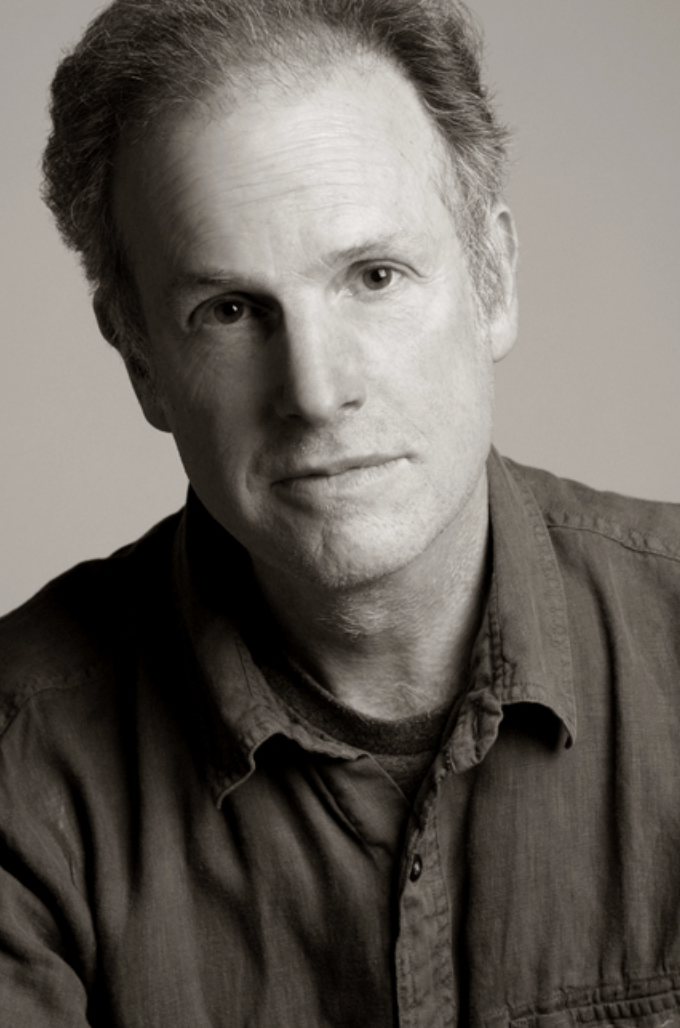
Daniel Joseph Polikoff, PhD, is a poet, translator, essayist, and internationally recognized Rilke scholar whose work ranges across literature, depth psychology, anthroposophy, and the history of consciousness. He teaches at Pacifica Graduate Institute and is the author of numerous books of poetry, criticism, translation, and creative nonfiction, including In the Image of Orpheus: Rilke—A Soul History, his translation of Rilke’s Sonnets to Orpheus, Rue Rilke, and the recent Reset or Renaissance volumes.
Holding a PhD in Comparative Literature from Cornell University and a diploma in Waldorf Education from Rudolf Steiner College, Polikoff has long worked at the confluence of literary rigor and spiritual intelligence. His writing and teaching draw deeply on world literature, archetypal psychology, anthroposophy, and Neoplatonic thought, consistently seeking to illuminate the relation between the sensible and spiritual dimensions of human life.