
Kali Niyama Cape
Entangled Bodies, Awakened Matter
September 27, 2026 — 10 AM PT/ 1 PM ET/ 6 PM GMT
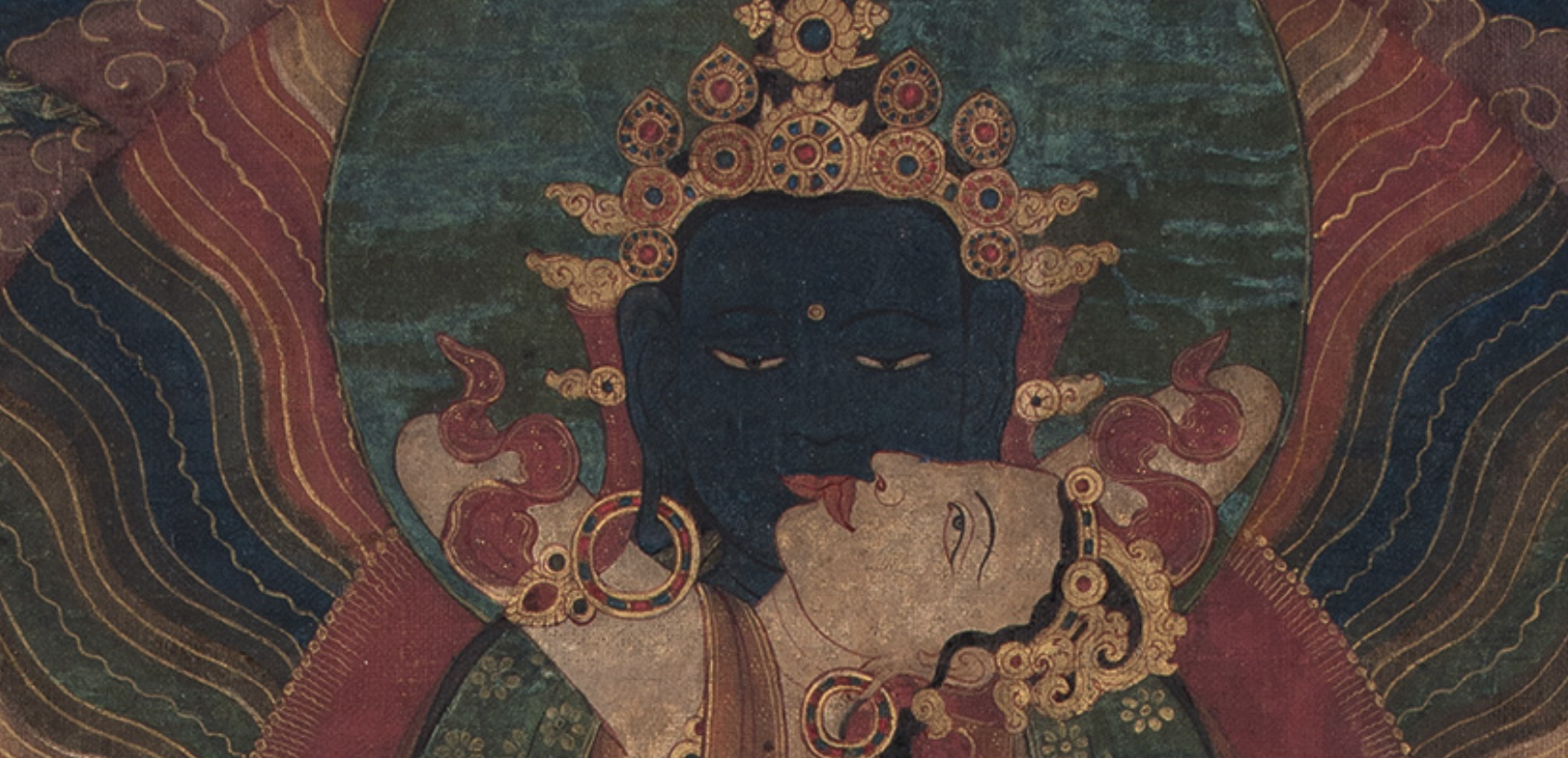
Drawing on the great fourteenth century Tibetan philosopher, Longchenpa, and Tibetan Great Perfection literature (rdzogs chen), this lecture presents esoteric Buddhism's vision of the body as a cosmological node, porous to elemental forces, luminous channels, and divine presences that exceeds the immanentist framework. Through close reading of fourteenth-century Tibetan sources alongside new materialist theorists, Alaimo and Barad, this talk develops the concept of cosmo-corporeality: the body as a site where immanence and transcendence are not opposed but interwoven, and where the boundary between knower and known dissolves into participatory awareness. This lecture draws on material developed for Pacifica Graduate Institute's Mythology and Religious Studies program, where Dr. Cape teaches courses on Tibetan Buddhist contemplative traditions.

Kali Nyima Cape, PhD, is Assistant Professor of Religious Studies and Director of Graduate Studies at Georgia State University. A historian of Buddhist philosophy, she focuses on transnational Tibetan Buddhism, contemplative traditions, women in Buddhism, and the philosophical literature on ultimate reality, meditation, and esoteric practice. Her work brings rigorous historical and philological inquiry into dialogue with questions of embodiment, gender, resilience, and multiple ways of knowing, with particular attention to the fourteenth-century formation of Tibetan contemplative canons.
Cape received her PhD in Religious Studies from the University of Virginia, where her dissertation focused on women and sexuality in esoteric Tibetan contemplative literature, especially Great Perfection (rdzogs chen). Drawing on decades of immersion in Tibetan Buddhist communities across India, Nepal, Tibet, Bhutan, and North America, she writes with unusual depth at the intersection of Buddhist philosophy, contemplative pedagogy, feminist and decolonial theory, and the study of religious transformation. Her current manuscript, Yoginīs in Tibet, recovers the neglected history of women in Great Perfection traditions and contributes a vital new perspective to Buddhist studies, gender studies, and the history of consciousness.